Tuesday, July 24, 2007

Juxtapoz riflings 2


"Uplift" by Rene Gagnon

the iPhone: a review by David Pogue...

The iPhone Matches Most of Its Hype

The iPhone, set to be released on June 29, is three devices in one: a cellphone, a wide-screen iPod, and an Internet communications device.
By DAVID POGUE from NYTimes.com
Published: June 27, 2007

Talk about hype. In the last six months, Apple’s iPhone has been the subject of 11,000 print articles, and it turns up about 69 million hits on Google. Cultists are camping out in front of Apple stores; bloggers call it the “Jesus phone.” All of this before a single consumer has even touched the thing.

So how is it?

As it turns out, much of the hype and some of the criticisms are justified. The iPhone is revolutionary; it’s flawed. It’s substance; it’s style. It does things no phone has ever done before; it lacks features found even on the most basic phones.

Unless you’ve been in a sensory-deprivation tank for six months, you already know what the iPhone is: a tiny, gorgeous hand-held computer whose screen is a slab of touch-sensitive glass.

The $500 and $600 models have 4 and 8 gigabytes of storage, respectively — room for about 825 or 1,825 songs. (In each case, 700 megabytes is occupied by the phone’s software.) That’s a lot of money; then again, the price includes a cellphone, video iPod, e-mail terminal, Web browser, camera, alarm clock, Palm-type organizer and one heck of a status symbol.

The phone is so sleek and thin, it makes Treos and BlackBerrys look obese. The glass gets smudgy — a sleeve wipes it clean — but it doesn’t scratch easily. I’ve walked around with an iPhone in my pocket for two weeks, naked and unprotected (the iPhone, that is, not me), and there’s not a mark on it.

But the bigger achievement is the software. It’s fast, beautiful, menu-free, and dead simple to operate. You can’t get lost, because the solitary physical button below the screen always opens the Home page, arrayed with icons for the iPhone’s 16 functions.

You’ve probably seen Apple’s ads, showing how things on the screen have a physics all their own. Lists scroll with a flick of your finger, CD covers flip over as you flick them, e-mail messages collapse down into a trash can. Sure, it’s eye candy. But it makes the phone fun to use, which is not something you can say about most cellphones.

Apple has chosen AT&T (formerly Cingular) to be the iPhone’s exclusive carrier for the next few years, in part because the company gave Apple carte blanche to revise everything people hate about cellphones.

For example, once the phone goes on sale this Friday, you won’t sign up for service in a phone store, under pressure from the sales staff. You will be able to peruse and choose a plan at your leisure, in the iTunes software on your computer. Better yet, unlimited Internet service adds only $20 a month to AT&T’s voice-plan prices, about half what BlackBerry and Treo owners pay. For example, $60 gets you 450 talk minutes, 200 text messages and unlimited Internet; $80 doubles that talk time. The iPhone requires one of these voice-and-Internet plans and a two-year commitment.

On the iPhone, you don’t check your voice mail; it checks you. One button press reveals your waiting messages, listed like e-mail. There’s no dialing in, no password — and no sleepy robot intoning, “You...have...twenty...one...messages.”

To answer a call, you can tap Answer on the screen, or pinch the microscopic microphone bulge on the white earbud cord. Either way, music or video playback pauses until you hang up. (When you’re listening to music, that pinch pauses the song. A double-pinch advances to the next song.)

Making a call, though, can take as many as six steps: wake the phone, unlock its buttons, summon the Home screen, open the Phone program, view the Recent Calls or speed-dial list, and select a name. Call quality is only average, and depends on the strength of your AT&T signal.

E-mail is fantastic. Incoming messages are fully formatted, complete with graphics; you can even open (but not edit) Word, Excel and PDF documents.

The Web browser, though, is the real dazzler. This isn’t some stripped-down, claustrophobic My First Cellphone Browser; you get full Web layouts, fonts and all, shrunk to fit the screen. You scroll with a fingertip — much faster than scroll bars. You can double-tap to enlarge a block of text for reading, or rotate the screen 90 degrees, which rotates and magnifies the image to fill the wider view.

Finally, you can enlarge a Web page — or an e-mail message, or a photo — by spreading your thumb and forefinger on the glass. The image grows as though it’s on a sheet of latex.

The iPhone is also an iPod. When in its U.S.B. charging cradle, the iPhone slurps in music, videos and photos from your Mac or Windows PC. Photos, movies and even YouTube videos look spectacular on the bright 3.5-inch very-high-resolution screen.

The Google Maps module lets you view street maps or aerial photos for any address. It can provide driving directions, too. It’s not real G.P.S. — the iPhone doesn’t actually know where you are — so you tap the screen when you’re ready for the next driving instruction.

But how’s this for a consolation prize? Free live traffic reporting, indicated by color-coded roads on the map.

Apple says one battery charge is enough for 8 hours of calls, 7 hours of video or 24 hours of audio. My results weren’t quite as impressive: I got 5 hours of video and 23 hours of audio, probably because I didn’t turn off the phone, Wi-Fi and other features, as Apple did in its tests. In practice, you’ll probably wind up recharging about every other day.

So yes, the iPhone is amazing. But no, it’s not perfect.

There’s no memory-card slot, no chat program, no voice dialing. You can’t install new programs from anyone but Apple; other companies can create only iPhone-tailored mini-programs on the Web. The browser can’t handle Java or Flash, which deprives you of millions of Web videos.

The two-megapixel camera takes great photos, provided the subject is motionless and well lighted . But it can’t capture video. And you can’t send picture messages (called MMS) to other cellphones.

Apple says that the battery starts to lose capacity after 300 or 400 charges. Eventually, you’ll have to send the phone to Apple for battery replacement, much as you do now with an iPod, for a fee.

Then there’s the small matter of typing. Tapping the skinny little virtual keys on the screen is frustrating, especially at first.

Two things make the job tolerable. First, some very smart software offers to complete words for you, and, when you tap the wrong letter, figures out what word you intended. In both cases, tapping the Space bar accepts its suggestion.

Second, the instructional leaflet encourages you to “trust” the keyboard (or, as a product manager jokingly put it, to “use the Force”). It sounds like new-age baloney, but it works; once you stop stressing about each individual letter and just plow ahead, speed and accuracy pick up considerably.

Even so, text entry is not the iPhone’s strong suit. The BlackBerry won’t be going away anytime soon.

The bigger problem is the AT&T network. In a Consumer Reports study, AT&T’s signal ranked either last or second to last in 19 out of 20 major cities. My tests in five states bear this out. If Verizon’s slogan is, “Can you hear me now?” AT&T’s should be, “I’m losing you.”

Then there’s the Internet problem. When you’re in a Wi-Fi hot spot, going online is fast and satisfying.

But otherwise, you have to use AT&T’s ancient EDGE cellular network, which is excruciatingly slow. The New York Times’s home page takes 55 seconds to appear; Amazon.com, 100 seconds; Yahoo. two minutes. You almost ache for a dial-up modem.

These drawbacks may be deal-killers for some people. On the other hand, both the iPhone and its network will improve. Apple points out that unlike other cellphones, this one can and will be enhanced with free software updates. That’s good, because I encountered a couple of tiny bugs and one freeze. (There’s also a tantalizing empty space for a row of new icons on the Home screen.) A future iPhone model will be able to exploit AT&T’s newer, much faster data network, which is now available in 160 cities.

But even in version 1.0, the iPhone is still the most sophisticated, outlook-changing piece of electronics to come along in years. It does so many things so well, and so pleasurably, that you tend to forgive its foibles.

In other words, maybe all the iPhone hype isn’t hype at all. As the ball player Dizzy Dean once said, “It ain’t bragging if you done it.”

The Sizes of Infinity...

Strange but True: Infinity Comes in Different Sizes

If you were counting on infinity being absolute, your number's up
By John Matson from Sciam.com

In the 1995 Pixar film Toy Story, the gung ho space action figure Buzz Lightyear tirelessly incants his catchphrase: "To infinity … and beyond!" The joke, of course, is rooted in the perfectly reasonable assumption that infinity is the unsurpassable absolute—that there is no beyond.

That assumption, however, is not entirely sound. As German mathematician Georg Cantor demonstrated in the late 19th century, there exists a variety of infinities—and some are simply larger than others.

Take, for instance, the so-called natural numbers: 1, 2, 3 and so on. These numbers are unbounded, and so the collection, or set, of all the natural numbers is infinite in size. But just how infinite is it? Cantor used an elegant argument to show that the naturals, although infinitely numerous, are actually less numerous than another common family of numbers, the "reals." (This set comprises all numbers that can be represented as a decimal, even if that decimal representation is infinite in length. Hence, 27 is a real number, as is π, or 3.14159….)

In fact, Cantor showed, there are more real numbers packed in between zero and one than there are numbers in the entire range of naturals. He did this by contradiction, logically: He assumes that these infinite sets are the same size, then follows a series of logical steps to find a flaw that undermines that assumption. He reasons that the naturals and this zero-to-one subset of the reals having equally many members implies that the two sets can be put into a one-to-one correspondence. That is, the two sets can be paired so that every element in each set has one—and only one—"partner" in the other set.

Think of it this way: even in the absence of numerical counting, one-to-one correspondences can be used to measure relative sizes. Imagine two crates of unknown sizes, one of apples and one of oranges. Withdrawing one apple and one orange at a time thus partners the two sets into apple-orange pairs. If the contents of the two crates are emptied simultaneously, they are equally numerous; if one crate is exhausted before the other, the one with remaining fruit is more plentiful.

Cantor thus assumes that the naturals and the reals from zero to one have been put into such a correspondence. Every natural number n thus has a real partner rn. The reals can then be listed in order of their corresponding naturals: r1, r2, r3, and so on.

Then Cantor's wily side begins to show. He creates a real number, called p, by the following rule: make the digit n places after the decimal point in p something other than the digit in that same decimal place in rn. A simple binary method would be: choose 0 when the digit in question is 1; otherwise, choose 1.

For demonstration's sake, say the real number pair for the natural number 1 (r1) is the decimal component of π (0.14159…), the pair for 2 (r2) is George W. Bush's share of the popular vote in 2000 (0.47868…) and that of 3 (r3) is Ted Williams's famed .400 batting average from 1941 (0.40570…).

Now create p following Cantor's construction: the digit in the first decimal place should not be equal to that in the first decimal place of r1, which is 1. Therefore, choose 0, and p begins 0.0…. Then choose the digit in the second decimal place of p so that it does not equal that of the second decimal place of r2, which is 7 (choose 1; p = 0.01…). Finally, choose the digit in the third decimal place of p so that it does not equal that of the corresponding decimal place of r3, which is 5 (choose 1 again; p = 0.011…).

Continuing down the list, this mathematical method (called "diagonalization") generates a real number p between zero and one that, by its construction, differs from every real number on the list in at least one decimal place. Ergo, it cannot be on the list.

In other words, p is a real number without a natural number partner—an apple without an orange. Thus, the one-to-one correspondence between the reals and the naturals fails, as there are simply too many reals—they are "uncountably" numerous—making real infinity somehow larger than natural infinity.

"The idea of being 'larger than' was really a breakthrough," says Stanley Burris, professor emeritus of mathematics at the University of Waterloo in Ontario. "You had this basic arithmetic of infinity, but no one had thought of classifying within infinity—it was just kind of a single object before that."Adds mathematician Joseph Mileti of Dartmouth College: "When I first heard the result and first saw it, it was definitely something that knocked me over. It's one of those results that's short and sweet and really, really surprising."

Harry magic for Amazon...


Aided by Harry Potter Fans, Amazon Triples Its Profit


Published: July 25, 2007 from NYTimes.com

SAN FRANCISCO, July 24 — Some of Harry Potter’s magic has rubbed off on Amazon.com. The company, based in Seattle, announced today that its second-quarter net income increased more than threefold on revenue that rose 35 percent.

The news pushed up the company’s stock in after-hours trading to a level it has not reached since February 2000, during the heyday of the dot-com boom.

The results come four days after Amazon delivered 2.2 million copies of “Harry Potter and the Deathly Hallows,” the final installment in the blockbuster fantasy series. Amazon will count that revenue next quarter, but interest in the book helped drive 8 percent more traffic to the site in the most recent quarter, according to Nielsen/NetRatings. Other purchases that Potter fans tacked on counted toward Amazon’s quarter, which ended June 30.

The online retailer reported net income of $78 million, or 19 cents a share, compared with $22 million, or 5 cents a diluted share, in the same period last year.

Adidas hopping bad...

California bars Adidas from selling kangaroo shoes

By Alexandria Sage Tue Jul 24, 12:25 PM ET from Yahoo.com

LOS ANGELES (Reuters) - The Supreme Court of California Monday barred athletic shoe maker Adidas from selling shoes made from kangaroo leather in California, reversing a lower court's decision.

California does not allow products made from kangaroos to be sold or imported into the state, but Adidas had claimed that the state law conflicted with the aims of the U.S. Endangered Species Act, which sought to support Australian efforts to control kangaroos. The expanding population of the jumping marsupials has become a problem for Australia.

"The bottom line is they've decided the California law is constitutional. As of now, it is illegal to sell products made of kangaroos in California," said Orly Degani, a lawyer for Viva! USA, an animal rights group that first filed a lawsuit in 2003 challenging the sale of kangaroo-skin shoes in the state.

A lawyer for the Humane Society of the United States, which filed a "friend of the court" brief on behalf of plaintiffs Viva! USA, called the court's decision "critically important" for species other than just kangaroos -- such as grizzly bears, bald eagles and wolves, which are dependent on state protection.

"When the federal government decides not to protect a species, the state can still do so," said HSUS counsel Jonathan Lovvorn, explaining the ruling. "What Adidas was saying was when the federal government decides not to protect a species, the state can't protect it either. That was squarely rejected by the court."

A spokeswoman for Adidas wrote in an e-mail that the company expects to ultimately prevail in the matter, but did not clarify further. Other legal matters related to the case now will be sent back to the appeals court.

Meanwhile, a bill that would overturn California's ban is working its way through the state legislature.

"Although Adidas makes some shoes using kangaroo leather, a common practice in our industry, Adidas does not make shoes from any endangered or threatened kangaroo species," said the Adidas spokeswoman Andrea Corso.

The Supreme Court's decision reversed a victory for defendants Adidas and retailers Sports Chalet and Offside Soccer last year when they won their appeal of the lawsuit brought by Viva! USA.

NY...Arts back in schools?

Bloomberg Announces Plan to Shore Up Arts in Schools

By Jennifer Median from NYTimes.com
Published: July 24, 2007

Mayor Michael R. Bloomberg announced yesterday that the city’s Department of Education will require all schools to maintain arts programs, and that principals will be rated in their annual reviews on how well they run those programs.

The announcement came just months after the department infuriated arts groups by eliminating a multimillion-dollar program to finance arts education.

Under a new set of city standards, the arts curriculums will be judged for comprehensiveness, and potential pay bonuses for principals could be affected.

“An excellent arts education is essential,” the mayor said at a news conference at Stuyvesant High School in Manhattan.

Last winter, the city schools chancellor, Joel I. Klein, told several arts advocates that the department was planning to give principals discretion over $67.5 million that had previously been budgeted specifically for Project Arts, which financed arts education. The project, developed in the Giuliani administration, was intended to rebuild arts programs that were obliterated during the fiscal crisis of the 1970s.

Yesterday’s announcement was met with muted praise and skepticism from arts advocates, who have worried that if no money is targeted for the arts, principals in struggling schools will eliminate arts programs to devote more money to basic reading and math programs.

The Project Arts money was used to pay for a variety of things: supplies, teachers, dance and music instruction, artist residencies. Officials said the money was a fraction of the department’s spending on arts. The change in arts financing is part of a larger effort by the administration to give principals more control over how money is spent in their schools. But even as they give principals more authority over how to run their schools, officials are demanding that principals who do not meet requirements in math and reading — and now the arts — face being reassigned.

“I think experience has shown us that money alone will not improve student outcomes in the arts or any other subject,” the mayor said. “Money doesn’t make the difference, accountability does.”

...Under the new plan, arts will be part of the revamped school report cards to be issued starting this fall. The arts will be one factor used to judge a school’s “learning environment,” which will make up 15 percent of a school’s grade. A school will also receive an annual review of its program that will be used to determine whether the principal gets a performance bonus.

The department will also begin issuing an annual report in January about the arts programs in each school. That report will be developed partly by a newly formed arts education task force, which is made up of several leaders from arts groups around the city.

Richard Kessler, the executive director of the Center for Arts Education, which had been the most vocal critic of the plan to divert the money from Project Arts, said yesterday that his group would take a wait-and-see approach. “We applaud the public commitment of the mayor and chancellor that every single school will meet state requirements,” he said, “and that they will be holding every single principal accountable to meeting the state requirements.”

Chancellor Klein said the city was not backing off a commitment to reinvigorate arts programs. He has repeatedly acknowledged that the school system has a wide mix of programs that range from stellar to nonexistent. A few years ago, he introduced a “blueprint” for arts education. “I didn’t want the arts to be a throwaway, I didn’t want arts be some add-on, some feel-good thing,” Mr. Klein said yesterday. “Arts education is critical, but it’s got to be coherent.”

Sunday, July 22, 2007

The Summer Jump Off

Last night C and I traveled to the LES ...
and attended the FlyID crew's show at Crudo...
Great canvasses and good to meet some new faces, hang out with Dil and MTK76...Especially nice to meet Yes and Mes...

Tuesday, July 10, 2007

The Next to the Last of the Single Homegirls...


husbandandwife.jpg
Originally uploaded by snailsone
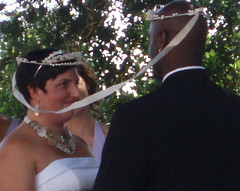
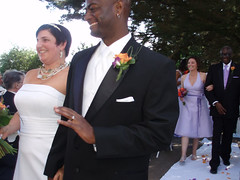
Alexandra and Bertie got married in Cali last month...It was beautiful...The bachelorette party was a blast too...Best wishes for a happy and fruitful marriage...Adrian is so cute!!


Friday, June 01, 2007

Iron Chef Snails


swedishchefweb.jpg
Originally uploaded by snailsone
oh no...Ba-Gawk! Here comes YNN...

serving chicken since 1996...

Burning New York...Cope, Ewok and West Panel...


>>The panel discussion was filled with bright-eyed bushy tailed youngins...It's always kind of wierd to hear discussions about graff just 'cuz it's not really a discussion kind of thing, it's more of a get up and do it kind of thing, I guess...I got the pleasure of meeting with Dillinger (co-founder of Flashbacks mag) and fam...Thanks to the KD crew...

Wednesday, May 30, 2007

A Brief Recap of North Korea and the struggle for disarmament...

Another Nuclear Dilemma: My Roots Are Showing by Snails

When I was growing up in the 80’s, the political climate was volatile. The Cold War was in full effect and thermonuclear war was on everyone’s minds with movies like “Threads”, “Wargames”, and “The Day After”. Nuclear disarmament is again a popular topic in world politics with the “War Against Terror” and countries like North Korea, which is considered to be part of the “Axis of Evil” as coined by President George W. Bush in his State of the Union address on January 29, 2002. His exact words were as follows:
[Our goal] is to prevent regimes that sponsor terror from
threatening America or our friends and allies with weapons
of mass destruction. Some of these regimes have been pretty
quiet since September the 11th. But we know their true nature.
North Korea is a regime arming with missiles and weapons of
mass destruction, while starving its citizens.…
…States like [this], and their terrorist allies, constitute
an axis of evil, arming to threaten the peace of the world.
By seeking weapons of mass destruction, these regimes
pose a grave and growing danger. They could provide
these arms to terrorists, giving them the means to match
their hatred. They could attack our allies or attempt to
blackmail the United States. In any of these cases, the price
of indifference would be catastrophic. (http://vote-smart.org)

Upon George W. Bush’s arrival into office in 2000, the U.S. has held a tougher and more aggressive stance toward North Korea. Cutting off one-on-one diplomatic relations initiated by the Clinton Administration, the Bush Administration accused North Korea of “violating the spirit of the Agreed Framework by developing a secret uranium program that the U.S. believed would circumvent the agreement.” The U.S. ceased the shipment of fuel oil it was supposed to provide. Pyongyang retaliated by expelling international inspectors and resuming the reprocessing of plutonium, which it had previously stopped under the 1994 Agreed Framework and on January 10, 2003, North Korea withdrew from the Nuclear Non-Proliferation Treaty (Harrison 1).
David Cortright, in his article, “The New Nuclear Danger”, says, “A strategy of selective coercion is fundamentally flawed” (20). According to Cortright, it has been the Bush Administration’s response to proliferation dangers to increase coercive pressures (19). Ronald E. Powaski reports in his article, “North Korea’s Nuclear Challenge” that in September of 2005, the Treasury Department ordered U.S. banks to sever relations with Banco Delta Asia because the bank was accused of passing counterfeit $100 bills manufactured by the North Korean government as well as helping to launder North Korean money made from drug smuggling and other illicit activities. “The restriction curtailed [North Korea’s] access to the international banking system, even for the purposes of legitimate foreign trade” (10). In Time’s article, “When Outlaws Get the Bomb”, Henry Soloski, former Defense Department nonproliferation expert in the Bush Administration, is quoted as saying, “The tactical game with North Korea—trying to get them to stand down their nuclear program—is now pretty much over. Now it’s a strategic game, containing them and waiting for the regime to collapse” (Powell 34). Cortright states that the attack on Iraq, which was ironically coined a “war for disarmament” by Jonathan Schell, has only served to harden the nuclear ambitions of Iran and North Korea with the example made of Saddam Hussein. He also cites Former Defense Secretary William Perry who said, “I have never been as worried as I am now that a nuclear bomb will be detonated in an American city. I fear that we are racing toward an unprecedented catastrophe.” Cortright goes on to warn that if the North Korean nuclear danger continues to persist, the pressure will be on for Japan and perhaps also for South Korea and Taiwan to develop corresponding nuclear capabilities (19).
…On July 4, 2006, North Korea tested four or five short range missiles, which landed in the Sea of Japan. The sixth missile, the Taepodong 2, was a long range missile but either failed or was aborted 40 seconds after launch. The seventh missile was launched the following day at 8:22 UTC. Media reports out of South Korea indicate that North Korea has three to four more missiles on launch pads and ready for firing. These missiles are believed to be of short to medium range…On October 9 2006, North Korea claimed that it had tested its first nuclear weapon at an undisclosed, underground test site. Within days, both the United States and China reported collecting air samples from the region that contained small amounts of radioactive material as well as seismic data showing a possible subterranean explosion, consistent with North Korea's claim that it had conducted a nuclear test…(Harrison 4)

Powaski details that in reaction to the nuclear test, the UN Security Council imposed sanctions on North Korea on October 14. “The sanctions included freezing the assets of businesses connected to North Korea’s nuclear and ballistic weapons programs, restricting the sale of luxury goods and placing travel bans on government officials. The Security Council also authorized neighboring countries to inspect cargo going into and out of North Korea” (10). Bush's reaction to the blast was to say, "The transfer of nuclear weapons or material by North Korea to other states or nonstate entities would be considered a grave threat to the United States, and we would hold North Korea fully accountable for the consequences of such action" (Powell 33). As President, Bush has proven himself to be quick to take military action and with this track record, I do not perceive him as a “negotiator” or a “peacemaker”. It is one thing for him to give a tour of Graceland to the Prime Minister of Japan or to hold hands with the King of Saudi Arabia in a garden, but to talk a madman down from detonating weapons?
With North Korea’s closed off, secretive and isolated nature, it is hard to tell if Kim Jong Il, dictatorial Leader of North Korea, is bluffing or if he really holds under his command a giant cache of WMD. In Dismantling the DPRK’s Nuclear Weapons Program, David Albright writes that the current size and status of the DPRK’s nuclear weapons program are unknown although North Korean officials have often stated since February 2005 that the DPRK has nuclear weapons, but have refused to say just how many or whether the weapons could be delivered by ballistic missile, which is the most threatening delivery system to Japan and the United States (7). Cortright states that the risk of a bomb blowing up in a city is arguably greater than during the Cold War and is likely to increase in the years ahead. It is speculated that Pyongyang has enough weapons-grade plutonium to produce 10 bombs. North Korea had only enough material for one or two bombs at the beginning of George W. Bush’s Presidency because during the Clinton Administration, North Korea agreed to freeze its existing nuclear programs and accept on-site monitoring. In the 90’s, the North Korean nuclear program was under inspected lockdown. The deal began to fall apart in 1998 and though the Clinton Administration negotiated a new arrangement with North Korea to halt missile tests and nuclear development, swapping for a U.S. commitment to normalize economic and diplomatic relations, as one of its last acts, the Bush Administration refused to carry on the negotiations (Cortright 19). Albright reports that in the process of negotiating a verified dismantlement plan, North Korea and the U.S. have made unacceptable proposals to each other due primarily to a lack of confidence in the other’s veracity. The United States has joined with China, Japan, Russia and South Korea in six-party talks to attempt to create a plan to dismantle North Korea’s program in a manner with which all nations can feel secure (Albright 1).
Made clear by President Bush’s 2002 address, his tone concerning North Koreans was very ominous, which reminds me of another time. As a kid in elementary school, I was offspring to one of the first waves of South Korean immigrants to arrive in the United States back in the late 60’s/early 70’s and I was asked frequently, “Are you from the South or are you a Red?” by the other kids. Not knowing any better and thinking that being Communist was an awful, awful thing, I would say I was from the South even though I was born in San Francisco and didn’t really know my history or the history of Korea.
Growing up, my Mom would tell me stories about where we came from and I also did some of my own research. In five thousand years, Korea had survived five major Occupations, several wars, and up until the Korean War, the North and the South had been one country with its capitol in Pyongyang. My great-great-grandfather was the last tutor to the last Prince of Korea, and our family had long been living in Pyongyang. Technically, I guess it is not incorrect to state I have roots in North Korea.
When I was twelve, I walked miles through a dark tunnel on the border of South Korea to a wall with a box to step up on in order to peer through a small rectangular window onto the DMZ (Demilitarized Zone). I could see North Korean soldiers, heavily armed on the other side. I would find out later that the town at the border was all for show, constantly lit up, but empty. I became very concerned about the split between the two Koreas after that experience and when I got a bit older, after the fall of the Berlin wall, I was asked to give a speech in a contest held by the community of Bay Area Korean Methodist churches. I orated a piece I had written about the reunification of Korea looking to Germany as an example. I lost out to “How to Make a Christian Salad”.“Add a bit of love, a dash of kindness, some rainbows…” Needless to say, I was disappointed by Koreans in the U.S. People, all elders, came up to me after my speech and said that the subject was too heavy, that I shouldn’t have chosen the topic because it went against the spirit of being American. This is when I began to develop confusion about my identity. I became split by being American and my own race. I just couldn’t understand how we Koreans had the same roots, but weren’t the same people. After all, everyone from the South has some family on the other side. It is unfortunate that the government in place in North Korea is self-interested and unconcerned for its citizens. I now agree that the increasingly maniacal disregard for his people has proven Kim Jong Il’s need to be checked. And when I hear about the North Korean human rights atrocities and starvation rates, rumors of cannibalism in the streets due to the lack of food, I find myself horrified and also disgusted by the overindulgent Kim Jong Il. I feel for those suffering under his dictatorial regime.
Kim's reputation for personal extravagance is a focus of international attention on both the man and his country. In the context of United Nations sanctions restricting the trade in luxury items to North Korea following the country's October 2006 nuclear test, Reuters coverage noted that "No one enjoys luxury goods more than paramount leader Kim Jong-il, who boasts the country's finest wine cellar with space for 10,000 bottles. Kim has a penchant for fine food such as lobster, caviar and the most expensive cuts of sushi that he has flown in to him from Japan. His annual purchases of Hennessy's cognac reportedly total to $700,000, while the average North Korean earns the equivalent of $900 per year.” (Blitzer 1)

Powaski says that North Korea has had to “swallow a dose of realism” because of imposed UN sanctions, although he also states that neither China nor South Korea, North Korea’s two most important trading partners, have conducted the rigorous inspections required to make the sanctions work (10). I think Kim Jong Il must be feeling the pinch a bit anyway because the latest installment of six-party talks may have made a breakthrough. In “North Korea Deal: Caution Follows”, Brian Bremner reports that according to a joint statement issued by the six-party members, as of February 14, 2007, North Korea has agreed to “shut down and seal for the purpose of abandonment the Yongbyon nuclear facility” and a plutonium reprocessing plant there, and also to invite back International Atomic Energy Agency inspectors to look around. North Korea, in exchange, will get an initial emergency energy assistance of 50,000 tons of heavy fuel oil and the U.S. and Japan will open up bilateral talks with Pyongyang. Paik Hak Soon, a North Korea specialist at Sejong Institute, thinks that Bush gave Secretary Condoleeza Rice and Assistant Secretary of State Christopher Hill the running room to convince Kim’s government the U.S. wasn’t intent on regime change and Kim Teng Jianquin, deputy secretary general of China Arms Control and Disarmament Association in Beijing thinks this shift in U.S. approach made a big difference (Bremner 17). Cortright states, “Nonproliferation successes in the past have relied not on military pressure but on diplomacy and carrot-and-stick bargaining” (20).
In Bremner’s article, he says that the compromises made in Beijing by the six party members will be met with blistering criticism in the U.S. and that Bush is sure to come under fire from watchful national-security Republicans who think that the U.S. gave away too much to strike a deal that may be dead a year from now. After all, there is no guarantee that IAEA inspectors will truly be allowed complete access to North Korean nuclear labs and processing plants or that Kim will hand over any of the nuclear weapons that the U.S. CIA believe he has already developed. Another reason there could be a stall in normalizing relations with North Korea is Japanese Prime Minister Shinzo Abe has been under heavy domestic pressure to have North Korea make restitution for its past abduction of Japanese citizens. North Korea’s removal as a designated terrorist state will still take many years even if all these hurdles can be bypassed (17).
Cortright claims that the challenge in halting proliferation in particular countries “depends on a global commitment to prevent the spread of nuclear weapons everywhere.” He goes on to say that, “ultimately the success of any nonproliferation strategy requires a universal standard” and Washington’s “Do as I say, not as I do” approach is hypocritical not to mention lacking in moral authority (21). I am not claiming to know the answer to safety in a post-911 world, however when asked how all this affects me, I must say that the fact that North Korea is so close to home, and that the United States is my home, the only thing I can do is to separate my identity like an egg white from a yolk, and hope that world peace is the eventual wish for most countries in this global community. I find myself siding with those invested in eventual and total disarmament, however I am also a realist. The war in Iraq which has produced no WMD findings is a painful strain due to its longevity and lack of progress not to mention disappointing because of its lack of evidence, and yet nuclear weapons, especially if in the wrong hands, is a fear that prevents any future peace in a suspicious new age. Therefore there is a need for normalized relations with secretive countries like North Korea which could not only change the course of the nuclear race, but also could be a real first step in breaking down the wall, though that is just a Korean dream.

WORKS CITED
Albright, David. Dismantling the DPRK’s Nuclear Weapons Program. Washington, DC: U.S. Institute of Peace, 2006.

Blitzer, Wolf. "North Korean leader loves Hennessey, Bond movies." CNN.com, 8 Jan. 2003.

Bremner, Brian. “North Korea Deal: Caution Follows.” Business Week Online. 14 Feb. 2007, 17.

Bush, George. Address. State of the Union. The United States Capitol, 29 Jan. 2002.

Cortright, David. “The New Nuclear Danger.” America. 11 Dec. 2006, Vol. 195 Issue 19, 18-22.

Harrison, Selig S. “Did North Korea Cheat?” Foreign Affairs. January/February 2005. Vol 84, Number 1. 1-5.

Powaski, Ronald E. “North Korea's Nuclear Challenge.” America. 12 Feb. 2007, Vol. 196 Issue 5, 9-11.

Powell, Bill; Baker, Aryn; Burger, Timothy J.; Donnelly, Sally B.; Shannon, Elaine; Elegant, Simon; Graff, James; Hasnain, Ghulam; MacLeod, Scott; McAllister, J. F. O.; McGirk, Tim; Purvis, Andrew; Robinson, Simon; Veale, Jennifer; Walsh, Bryan. “When Outlaws Get the Bomb.” Time. 23 Oct. 2006, Vol. 168 Issue 17, 32-37.

To help Darfur is to cut off Darfur...only one way to Bush a regime...


>>As US citizens we all are appalled at the humans rights atrocities in Darfur, but I am wondering if hurting them financially is going to have an effect or make the situation worse before it gets any better? Bush's ways of attacking harmful regimes has been to disable the regimes by taking away their financial support and waiting until they collapse, at least that's what happened in the case of North Korea...Meanwhile millions of innocent civilians die of hunger...

...President Bush
announced the United States was enforcing sanctions that bar 31 Sudanese companies owned or controlled by Sudan's government from the U.S. banking system. The sanctions also prevent three Sudanese individuals from doing business with U.S. companies or banks...this was taken from Sudan: U.S. sanctions over Darfur unfair By ALFRED de MONTESQUIOU, Associated Press Writer Tue May 29, 5:16 PM ET from Yahoo.com

Beating Illegals around the Bush...

Bush confronts immigration deal skeptics

By BEN FELLER, Associated Press Writer from yahoo.com

GLYNCO, Ga. President Bush attacked opponents of an immigration deal Tuesday, suggesting they "don't want to do what's right for America"...

..."You can use it to frighten people," Bush said. "Or you can show leadership and solve this problem once and for all."

The bill would give temporary legal status to millions of unlawful immigrants, provided they came forward, paid a fine and underwent criminal background checks. To apply for a green card, they would have to pay another fine, learn English, return to their home country and wait in line.

The plan also would create a guest worker program. It would allow foreign laborers to come to the U.S. for temporary stints, yet with no guarantee they can eventually gain citizenship.

Both the new visa plan and the temporary worker program are contingent on other steps coming first. Those include fencing and barriers along the Mexico border, the hiring of more Border Patrol agents and the completion of an identification system to verify employees' legal status.

The legislation would also reshape future immigration decisions. A new point system would prioritize skills and education over family in deciding who can immigrate.

Georgia's senators both played leading roles in producing Bush's deal with the Senate. Yet they have also said they may not support the final bill, depending upon how it is amended.

Bush chastised those who say the proposal offers amnesty to illegal immigrants. He called it empty political rhetoric.


Tuesday, May 29, 2007

Cultural Creative?


You scored as a Cultural Creative
Cultural Creatives are probably the newest group to enter this realm. You are a modern thinker who tends to shy away from organized religion but still feels as if there is something greater than ourselves. You are very spiritual, even if you are not religious. Life has a meaning outside of the rational.

Cultural Creative


81%

Postmodernist


56%

Idealist


56%

Existentialist


44%

Fundamentalist


38%

Materialist


38%

Romanticist


38%

Modernist


6%
What is your worldview?

I also found a definition for being a cultural creative...

Wednesday, May 23, 2007

Pencil...the little tail...of breadcrumbs...

20 Things You Didn't Know About... Pencils

by Dean Christopher from Discover.com

1
There is no risk of lead poisoning if you stab yourself (or someone else) with a pencil because it contains no lead—just a mixture of clay and graphite. Still, pencil wounds carry a risk of infection for the stabees, lawsuits for stabbers.

2 And bad juju for anyone linked to Watergate: In his autobiography, G. Gordon Liddy describes finding John Dean (whom he despised for “disloyalty”) alone in a room. Spotting sharpened pencils on a desk, Liddy fleetingly considered driving one into Dean’s throat.

3 Graphite, a crystallized form of carbon, was discovered near Keswick, England, in the mid-16th century. An 18th-century German chemist, A. G. Werner, named it, sensibly enough, from the Greek graphein, “to write.”

4 The word “pencil” derives from the Latin penicillus, meaning—not so sensibly—“little tail.”

5 Pencil marks are made when tiny graphite flecks, often just thousandths of an inch wide, stick to the fibers that make up paper.

6 Got time to kill? The average pencil holds enough graphite to draw a line about 35 miles long or to write roughly 45,000 words. History does not record anyone testing this statistic.

7 The Greek poet Philip of Thessaloníki wrote of leaden writing instruments in the first century B.C., but the modern pencil, as described by Swiss naturalist Conrad Gesner, dates only to 1565.

8 French pencil boosters include Nicolas-Jacques Conté, who patented a clay-and-graphite manufacturing process in 1795; Bernard Lassimone, who patented the first pencil sharpener in 1828; and Therry des Estwaux, who invented an improved mechanical sharpener in 1847.

9 French researchers also hit on the idea of using caoutchouc, a vegetable gum now known as rubber, to erase pencil marks. Until then, writers removed mistakes with bread crumbs.

10 Most pencils sold in America today have eraser tips, while those sold in Europe usually have none. Are Europeans more confident scribblers?

11 Henry David Thoreau—American, but a confident scribbler all the same—used pencils to write Walden. And he probably got them free. His father owned a pencil-making business near Boston, where Henry allegedly designed his own pencils before becoming a semi-recluse.

12 In 1861, Eberhard Faber built the first American mass-production pencil factory in New York City.

13 Pencils were among the basic equipment issued to Union soldiers during the Civil War.

14 The mechanical pencil was patented in 1822. The company founded by its British developers prospered until 1941, when the factory was bombed, presumably by pencil-hating Nazis.

15 Je suis un crayon rouge. After the 1917 Soviet revolution, American entrepreneur Armand Hammer was awarded a monopoly for pencil manufacturing in the USSR.

16 More than half of all pencils come from China. In 2004, factories there turned out 10 billion pencils, enough to circle the earth more than 40 times.

17 Pencils can write in zero gravity and so were used on early American and Russian space missions—even though NASA engineers worried about the flammability of wood pencils in a pure-oxygen atmosphere, not to mention the menace of floating bits of graphite.

18 Those concerns inspired Paul Fisher to develop the pressurized Fisher Space Pen in 1965. After the Apollo 1 fire, NASA banned pencils in favor of his pen on manned spaceflights.

19 The world’s largest pencil is a Castell 9000, on display at the manufacturer’s plant near Kuala Lumpur. Made of Malaysian wood and polymer, it stands 65 feet high.

20 At the other extreme, engineers at the University of California at Santa Barbara have used an atomic force microscope as a kind of pencil to draw lines 50 nanometers (two millionths of an inch) wide. Just because they could.

Pharoahe Monche Tribute...

Another tribute show at Gallapagos on May 16...It was very entertaining, reminded me of shows during the nineties..Especially those Mic-Check 1, 2 shows in the BX...Props to Nabila...Division X fired it up early in the night and were really high energy kicking off an impressive lineup and through all the glitches in technology, they were professional and North even spat out an acapella..., Beatboxer Entertainment, the Canadian female lyricist Eternia surprised me...and many more, though Pharoahe spit out a nice freestyle, short but juicy at the end of the evening, and DJ Skeme was in the back where there were some really ill dancers and though it was at the end of the night, my movies (Docu-Album 1: Route 66 and Docu-Album 2: Influences and Long glances) played as visuals...It was an honor to be accompanied by such an awesome DJ...Special shoutout to Kevin for hanging out...and thanks to Joan and CRic for a crazy whirlwind evening of jolliness...Happy birthday to a 80-year young Nina, the life of the party, and thanks to Nidia for dinner...

Hmmmm....Scooch down to make room, and close the door...

Immigration deal survives early test from Yahoo.com

By JULIE HIRSCHFELD DAVIS, Associated Press Writer 48 minutes ago

WASHINGTON - The Senate turned back an early attack on the broad immigration overhaul Tuesday, keeping alive a temporary worker provision that could bring in as many as 600,000 foreign laborers each year.
Senators voted 64-31 to reject a proposal offered by Sen. Byron Dorgan (news, bio, voting record), D-N.D., and supported by some labor unions to delete the program, which is one of the measure's key elements.

The vote was the first big test for the improbable coalition that wrote the measure and is struggling to keep the fragile deal from unraveling under pressure from across the political spectrum.

The bill still faces myriad assaults, including further Democratic attempts to limit or alter the temporary worker program, which would bring in foreign employees on two-year visas.

The bill would also toughen border security, give quick legal status to the estimated 12 million immigrants in the country unlawfully and create a new workplace verification system to bar undocumented workers from getting jobs.

It would create a point system for future immigration applicants that would place less emphasis on family connections and more on education and skills in demand by U.S. businesses.

Republicans were considering efforts to strengthen the bill's security measures and make it more difficult for illegal immigrants to get on the path to citizenship. Democrats were eyeing changes that would ensure more visas would be available for family members of permanent residents or U.S. citizens.

Conservatives, liberals and centrists who worked out the White House-backed deal are struggling to keep the bill intact while giving Democrats and Republicans who harbor grave concerns about it opportunities to make revisions.

Coalition members meet each day to decide which proposed changes are deal-breakers to what they call their "grand bargain." Dorgan's was considered one such poison pill.

The temporary worker plan has come under attack from several fronts. It would allow most of the workers — largely unskilled, nonagricultural workers in areas such as construction, landscaping and meatpacking — to stay for up to three two-year stints, provided they left the United States for a year between each stay.

Many labor unions say that would depress wages and create a class of workers with no job rights. Business groups call the leave-and-return element unworkable. Hispanic advocacy organizations and religious groups say it unfairly denies workers the chance to stay in the U.S. and ultimately gain citizenship.

"It is just a fiction that these are jobs Americans aren't willing to do," Dorgan said. "The main reason that big corporations want a guest worker program is that it will drive down U.S. wages."

Dorgan's was just one of a host of modifications senators are seeking to the broad immigration plan, a measure that evokes strong emotions among the public. Aware of the potent crosscurrents on the issue, leaders have abandoned an effort to speed the measure through the Senate this week, and now plan a final vote in June.

Democrats and Republicans are to take turns offering amendments, a process expected to last all week and resume after next week's Memorial Day recess.

"There's good and bad in this," Senate Majority Leader Harry Reid (news, bio, voting record), D-Nev., said of the bill. "That's what amending the legislation is all about — trying to improve it."

Sen. Jeff Bingaman (news, bio, voting record), D-N.M., plans to offer an amendment to slash the number of annual visas available for temporary workers to 200,000. A similar proposal passed the Senate last year by an overwhelming margin.

Sen. Lindsey Graham (news, bio, voting record), R-S.C., plans to propose instituting mandatory prison sentences for foreigners caught crossing the border illegally. Sen. James Inhofe (news, bio, voting record), R-Okla., wants to add language to the measure declaring English the country's official language.

Sen. David Vitter (news, bio, voting record), R-La., announced he will seek to kill the legalization provisions altogether, calling them "amnesty, plain and simple."

>>Themed Designs and Global Schemes...Universal?

Universal plans South Korea theme park from Yahoo.com

By KELLY OLSEN, AP Business Writer Tue May 22, 11:43 AM ET

SEOUL, South Korea - Universal Parks & Resorts and a local partner signed an agreement Tuesday aimed at establishing a Universal Studios theme park in
South Korea that they want to see up and running in 2012.

"What we are hoping to do is to bring in a world class attraction not only for the Korean people but to draw tourism to this country," Frank P. Stanek, president of USKOR & Associates Co., Universal's South Korean partner, said at a press conference, citing the attraction of possible visitors from nearby China.

Other than the proposed date for opening the park, other details were vague, including how much the project might eventually cost. No site has been decided and financing remains in the planning stage, officials said.

"We are in the process of evaluating our options," said Stanek, a former Walt Disney Co. executive involved in setting up Disney them parks in the United States, Japan and France.

He said that officials hoped to decide on a location by the end of this year.

Universal Parks & Resorts, a division of General Electric Co.'s NBC Universal, operates Universal Studios theme parks in Orlando, Florida, and Hollywood, California, in the United States, as well as in Osaka, Japan.

The parks include attractions based on Universal films including "E.T. The Extra-Terrestrial" and "King Kong," as well as movies made by other studios such as "Spiderman" and "Shrek."

Universal Parks & Resorts Chairman and CEO Thomas L. Williams said South Korea's economic development, the concentration of half its almost 50 million population in the Seoul area and South Korean's familiarity with American cinema were positive factors behind the decision to bring a theme park to the country.

"We want to put you into your favorite scene from your favorite movie," he said, referring to attractions at Universal's other theme parks based on the films of Universal Studios.

In a press release, USKOR and Universal Parks & Resorts said that a facility in South Korea could potentially exceed the size of Universal Studios Hollywood or Universal Studios Japan.

Officials also said a them park would also draw on elements of South Korean cinema, which has developed an international reputation, especially in Asia.

"We want to be part of the Korean Wave," Williams said, referring to the popularity of South Korean culture and cinema in the region.

Williams said that the important thing at this stage was to be open and transparent and let the South Korean people know what the companies aim to do.

"We want to have an open transparent process by which first off the public in Korea ... that they all understand that we're committed to Korea for the long haul," he said.

USKOR's Stanek said he is confident that a park in South Korea would serve as a powerful draw for tourists from nearby China. But Williams said that for now Universal has no plans for a theme park there.

USKOR also said it has entered into a memorandum of understanding with South Korea's Posco Engineering & Construction Co., a unit of Posco, the world's third-largest steelmaker, to join the consortium it is organizing to invest in the park.

Universal Parks & Resorts is developing Universal Studios parks in Singapore and Dubai.

>>Themed Designs and Global Schemes...Universal?